
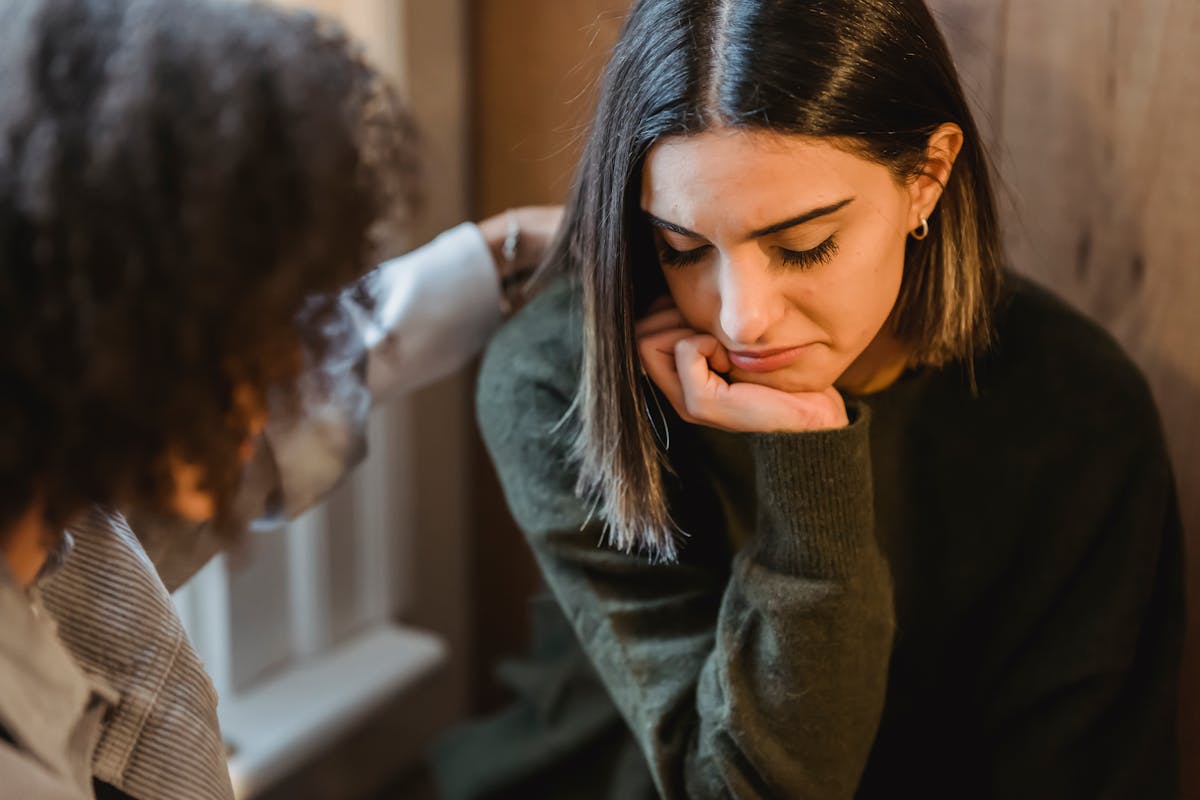
Healing moves like a winding path. It can feel like moments of movement followed by pauses, then movement again. That rhythm is one reason support circles are often shaped the way they are. The circle has no front and no back. Everyone sits at the same level. Each person has space.
In circle-based healing spaces, survivors experience connections without hierarchy. Seeing others exactly where they are on their own healing journey can create a sense of safety. That safety allows people to show up as they are. This can look like sharing or sitting quietly to listen.
Trauma can create deep feelings of isolation. Many survivors of sexual abuse or exploitation describe feeling alone, disconnected, or unsure of who can be trusted. In some cases, even their own bodies may no longer feel like a safe place.
Support groups and peer-to-peer recovery support help interrupt that isolation. Through the lens of social psychology, healing often feels more accessible when people experience safe, consistent support within the community.
In a supportive circle or talking circle:
- Speaking happens by choice
- Sharing personal details remains optional
- Listening holds equal value
When conversations gently return to shared experiences in a safe space, survivors get to choose their level of participation. This selective sharing technique helps protect emotional recovery and rebuild social confidence.
The Role of Relationships in Trauma Recovery
Learning how to trust again often becomes one of the most challenging parts of recovery. Trauma can disrupt a survivor’s sense of safety in relationships, making connections feel risky or exhausting.
Building a support circle includes choosing people who respect recovery boundaries and honor your pace. This may include supportive friendships, a trusted friend circle, or a carefully chosen social circle that aligns with your personal values.
Healing can also involve recognizing toxic influences and stepping back from relationships that increase stress or emotional harm. Creating distance from those dynamics can support personal growth and strengthen emotional recovery.
Healthy relationships during trauma recovery often share a common quality: they allow you to change. Supportive friendships meet you where you are, without conditions or pressure.
Creating a Care Community
Trauma affects both the mind and the body. Even long after physical wounds have healed, the nervous system may remain on high alert. Community can help the body relearn what safety feels like.
For some survivors, reconnecting with their body begins through creative hobbies or gentle movement. A yoga class, a painting class, or another creative space can offer grounding through shared presence that does not require conversation. These activities often build connections naturally while supporting emotional steadiness.
Support circles often create space for these experiences without forcing interaction. Sitting together, breathing together, or sharing quiet focus can help the body experience steadiness again.
Healing grows through small moments of connection.
Feeling Seen and Heard
Many survivors try to bury trauma and move forward quickly. This response often develops as a way to just make it through the day. However, the side effects of this approach may surface as anxiety, numbness, exhaustion, or disconnection. Moving through these emotions can help survivors reconnect to themselves.
Supportive communities allow survivors to explore challenging emotions at their own pace. Being seen and heard does not require retelling every detail of what happened. It means having space to acknowledge what remains and rediscover what safety feels like.
Mental health services can be one part of this process, alongside peer connection and community support. Healing looks different for everyone.
You Are Not Alone
Across cultures and generations, healing circles have existed to bring people together during times of pain and transition. Many traditions view circles as essential to community well-being. They remove hierarchy, center shared humanity and create space for difficult emotions to be held with care.
A support circle may include a therapist, trusted friends, family members, fellow survivors, or a combination. What shapes the experience most is how the space feels. Respect, steadiness, and support allow healing to unfold.
Healing often becomes more accessible when it is shared.
Support When You’re Ready
At Stronger Than, we support survivors of sexual abuse as they navigate recovery on their own timeline. Your story deserves to be heard by people who listen with empathy and care.
When and if you choose, support may also include learning about additional options, including legal resources. You deserve community and healing that protect your well-being.